How to get backlinks on autopilot in 2026 using AI

If you want to get backlinks on autopilot but don’t want to set up anything for yourself but would prefer a custom built solution, then use Backlinker AI. If you want to get backlinks on autopilot and have the technical knowledge to build it out yourself, I will explain the steps you need to take later in this article.
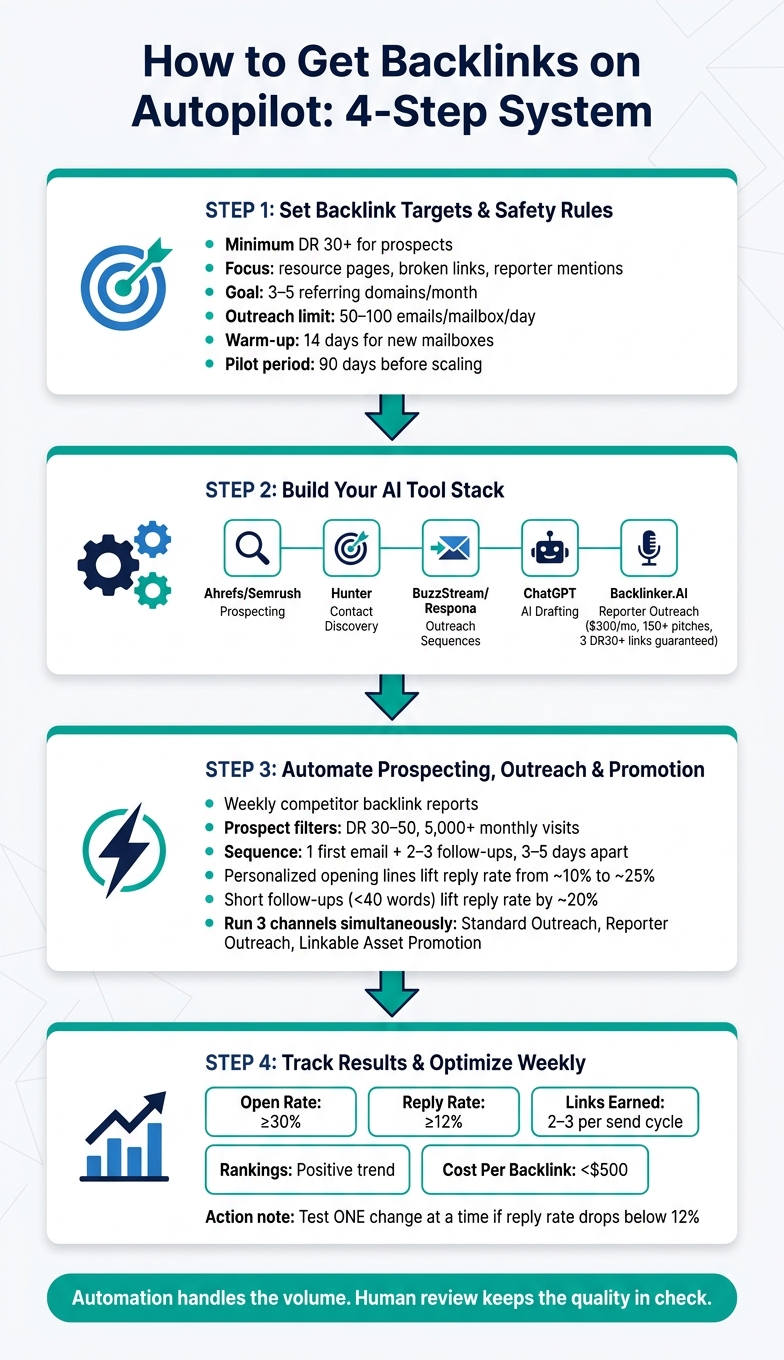
For most small teams, that aiming for 3 to 5 good referring domains per month, you usually have to send about 100 to 250 personalized pitches per month, and keeping email volume to 50 to 100 emails per mailbox per day after warm-up.
Here's how I do link building:
- I pick link targets with DR 30+ and strong topic match
- I focus on resource pages, broken link outreach, and reporter requests
- I warm up new mailboxes for 14 days
- I use tools like Ahrefs or Semrush, Hunter, BuzzStream or Respona, ChatGPT, and Backlinker.AI
- I run 2 channels at once: direct outreach and journalist outreach.
- For direct outreach, I use a custom built system
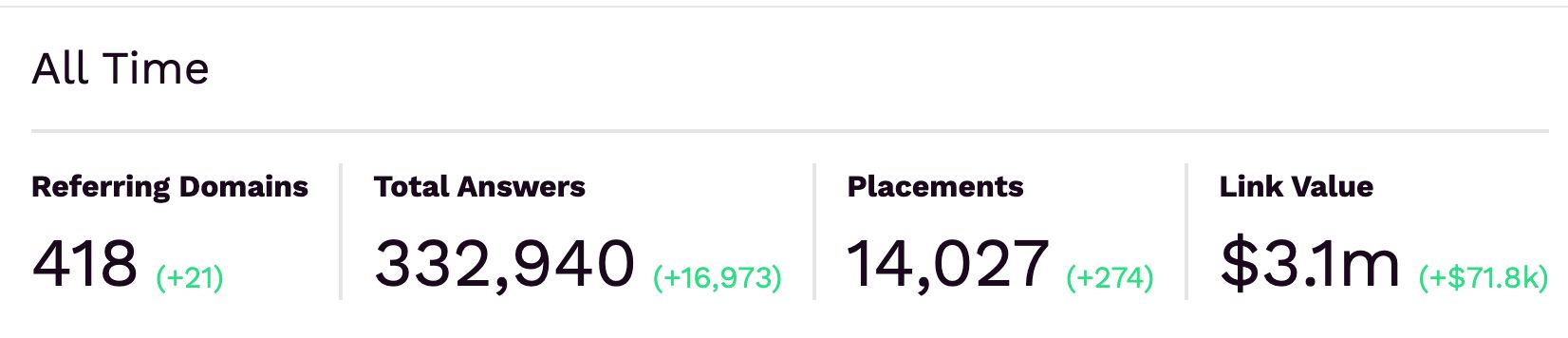
- For journalist outreach, I rely on Backlinker AI and run it for all my websites. Backlinker is over three years old and has generated over 12,000 backlinks and over $3 million in link value.
- I watch open rate, reply rate, links earned, rankings, and cost per backlink
- I test the system for 90 days before I scale it
If I had to boil the whole article down to one point, it would be this: automation saves time, but human review keeps link quality in check.
A few numbers stand out:
- Open rate goal: 30%+
- Reply rate goal: 12%+
- Follow-ups per sequence: 2 to 3
- Gap between emails: 3 to 5 days
- Cost per backlink target: under $500
Quick comparison
Part of the system | What I use it for | What I watch |
|---|---|---|
Prospecting | Find link chances from competitor backlinks and niche sites | DR, traffic, topic fit |
Contact finding | Get and verify emails | Accuracy, send success |
Outreach automation | Send first emails and follow-ups | Open rate, reply rate |
Reporter outreach | Pitch journalists on live requests | DR of placements, links won |
Weekly tracking | See what is working | Links, rankings, cost |
For direct outreach, I built a repeat system that handles the busywork while I control the rules, quality, and decisions.
For journalist outreach, Backlinker does all the heavy lifting and automatically finds all the relevant journalists, matches them to the appropriate clients, writes a human sounding response, sends it directly to the journalist and then tracks the success rate.
How To Get Backlinks on Auto Pilot & The Steps To Set It Up Yourself
Backlinker.AI for automated reporter outreach
Backlinker.AI matches your expertise to journalist queries on platforms like Featured.com, HelpAB2BWriter, and SOS, then sends personalized pitches automatically. On the Pro plan at $300/month, it sends 150+ pitches per month and guarantees a minimum of 3 DR 30+ backlinks.
So Backlinker works to get you links through the following steps but since it’s prebuilt, it will be completely hands off. If you're a small business looking for a really good value and don't have the technical know-how to build an autopilot scaled backlink system, then this might be the tool for you.
Step 1: Backlinker scours the Internet to find all the relevant pitch opportunities and then compiles them into a database. Here are some question examples:
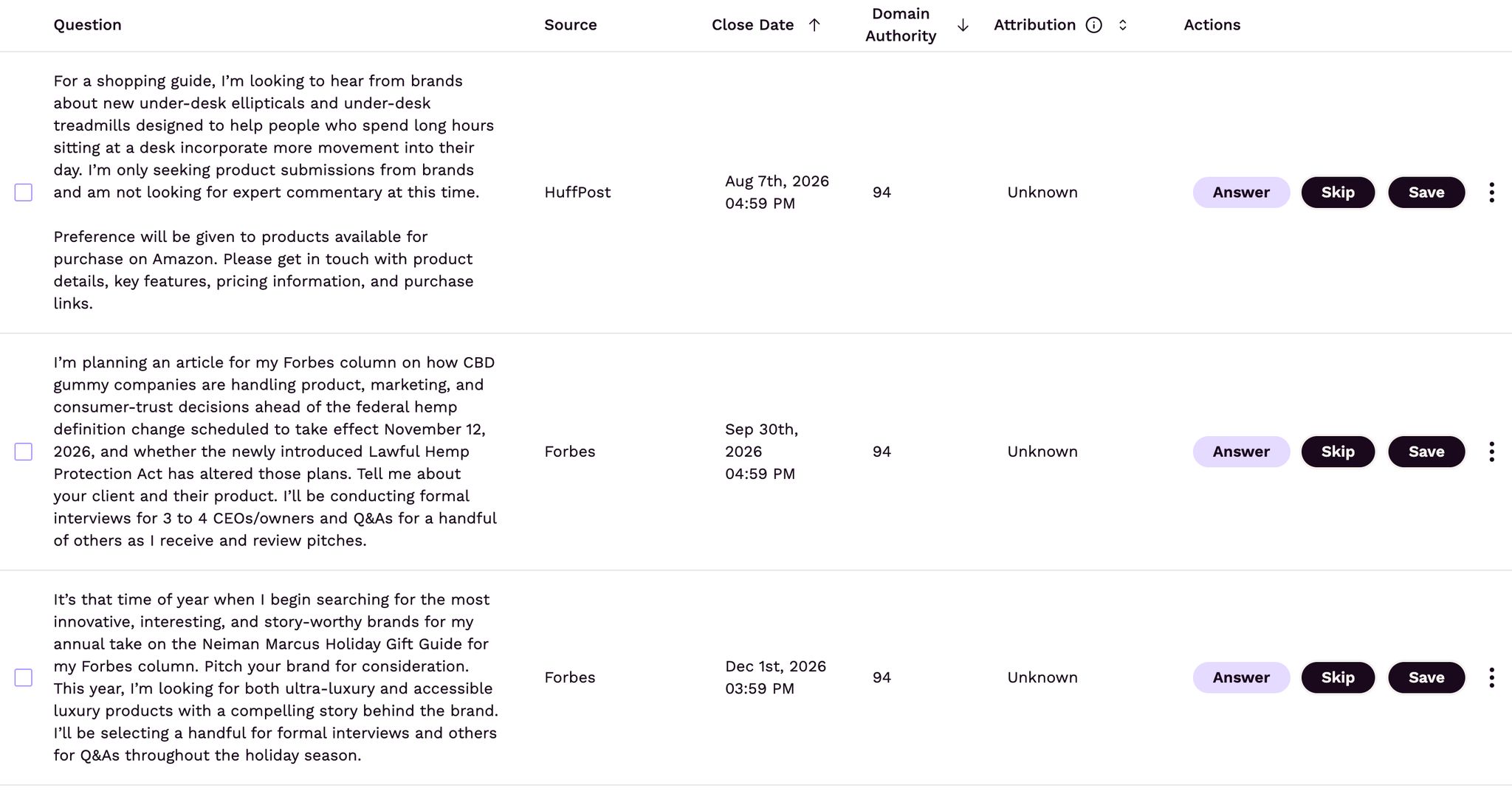
Step 2: Backlinker figures out which queries are relevant to your business and persona and then adds those into a database.
Step 3: for every relevant pitch opportunity, Backlinker will write a custom response that sounds human-ridden and relies on your persona, LinkedIn, website, and previous experience to handcraft an anecdote that will get selected by the journalists.
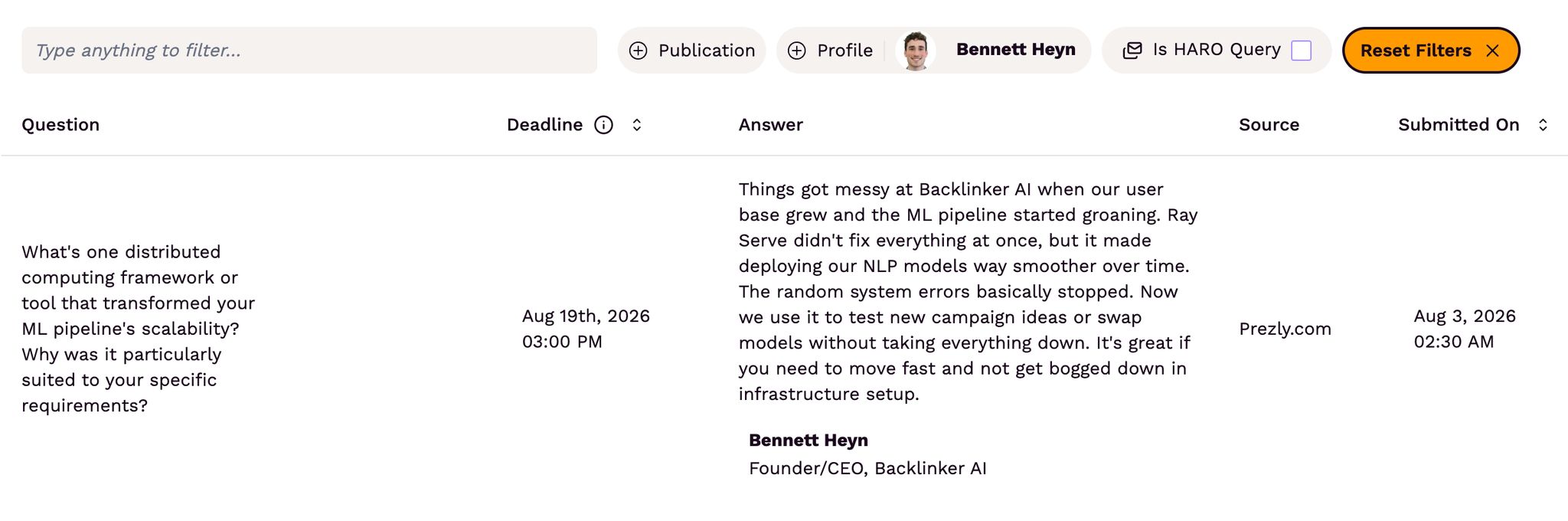
Step 4: You get published. it's really that simple. The tool just works and gets pitches submitted every single day, and after a month of submitting over 100 pitches, we guarantee you get at least three backlinks. Most clients end up getting anywhere from three to ten plus links every month from DR 30+ websites.
One reason to work with Backlinker is because we've been in business for 3+ years running the same system. The statistics speak for themselves: we have delivered over $3.1 million in link value, earned 14,000+ placements, and have submitted over 330,000 total answers across all of our customers
Building Backlinks - Custom Built Approach
Step 1: Set your backlink targets and safety rules
Before you automate anything, set clear backlink goals and a few hard limits. If you skip this step, you can end up sending a lot of outreach and getting very little back.
Define the types of links you want to earn
Some links help a lot more than others. If you want your system to pay off, set a minimum Domain Rating (DR) of 30+ for the sites you go after.
Focus on links that are placed by an editor inside the main body of an article, not in footers or sidebars. For automation, the link types that tend to work best are:
- resource page placements
- broken link replacements
- reporter mentions on high-authority publications
These work well because each one has a clear signal a tool can spot: a missing resource, a dead link, or a journalist request.
Topical fit matters just as much as DR. A strong domain is nice, but if the site has little to do with your topic, the link may not help much. Use your prospecting tools to score both domain strength and topic match.
For a small team, a good starting goal is 3 to 5 high-quality referring domains per month.
Set outreach limits to protect domain reputation
Email volume can backfire fast. If you send too many messages too soon from a new domain, deliverability can drop and your domain reputation can take a hit. After inbox warm-up, a safe range is 50 to 100 emails per mailbox per day.
If you're sending from a fresh domain or a new email address, give it a 14-day warm-up period before you start any sequences.
On the link side, don't repeat the same exact-match anchor text again and again. That's an easy red flag for search engines. Build variation into your templates from day one so your anchors look more natural.
It also helps to treat this like a test run first, not a full rollout. Run a 90-day pilot before you scale. Send 100 to 250 personalized pitches per month, track what gets replies and placements, and fix weak spots before you go bigger.
With those targets and limits in place, the next move is picking the tools that can run the system.
Step 2: Build your AI-powered backlink tool stack
Give each tool one job. When every platform has a clear role, the setup stays lean and easy to run.
Use Ahrefs or Semrush for prospecting and opportunity research
Start with Ahrefs or Semrush. Export competitor backlink profiles, then filter for resource pages, broken links, and niche-relevant domains.
From there, flag prospects that match resource page or broken-link patterns. Score them based on Domain Rating and topical fit, then send that list to your outreach tools.
That list becomes the starting point for email discovery and sequence building.
Use Hunter, BuzzStream, Respona, and ChatGPT for outreach operations
Use Hunter to find and verify emails. Use BuzzStream or Respona to manage sequences and follow-ups. Then use ChatGPT to draft subject lines, opening lines, and follow-up angles.
Once the list is enriched, the system can run scheduled outreach and follow-ups without manual send-offs.
Use each tool for a single stage of the process:
Tool | Role | Primary Use Case |
|---|---|---|
Ahrefs / Semrush | Prospecting | Competitor analysis, broken links, resource pages |
Hunter | Contact Discovery | Email finding and verification |
BuzzStream / Respona | Outreach Ops | Sequence management and follow-up automation |
ChatGPT | AI Drafting | Personalizing intros and subject lines |
Backlinker.AI | PR Automation | Automated reporter pitches |
That gives you two active channels: direct outreach and reporter outreach.
Step 3: Automate prospecting, outreach, and promotion
Turn your stack into a weekly system, not a bunch of one-off tasks.
Build a prospect pipeline that refreshes every week
Run a competitor backlink report in Ahrefs or Semrush once a week. Then filter for resource pages, broken links, and domains that match your niche.
A solid starting point looks like this:
- DR 30–50
- 5,000+ monthly visits
- Clear signs that the site is active
After that, use AI-assisted scoring to rank prospects by topical fit and chance of getting a reply. That way, your team starts with the best options first, not just the newest ones in the sheet. And that matters. A tighter filter means less time wasted on weak prospects.
Launch outreach sequences with personalization and follow-ups
Once the list is scored, send it straight into outreach.
Use ChatGPT to write a custom opening line for each contact based on the content on their page. Drop that line into your BuzzStream or Respona template along with the prospect’s name, site name, and the exact page you’re mentioning. That extra bit of relevance can move response rates from about 10% to roughly 25%.
Set up each sequence with:
- one first email
- 2 to 3 follow-ups
- a gap of 3 to 5 days between messages
Keep follow-ups short. Under 40 words is a good rule. Mention something new from their site so the message still feels tied to them. That step alone can lift reply rate by about 20%.
One thing you shouldn’t skip: have a person review the first email in any new sequence before it goes out.
Run linkable asset and reporter outreach at the same time
Use that same weekly rhythm for linkable assets and reporter queries too.
With Respona or a similar tool, promote your original research, data pages, and free tools to sites that already linked to similar content. This channel takes more work at the start, but it often earns editorial links from stronger domains.
At the same time, let Backlinker.AI handle reporter outreach in the background. It watches query platforms like Featured.com, HelpAB2BWriter, and SOS, matches those requests to your expertise profile, and sends AI-generated pitches on its own.
These channels work well together. For a small team, the tradeoffs are pretty clear:
Outreach Type | Effort | Typical Authority | Speed | Automation Potential |
|---|---|---|---|---|
Standard Outreach | High | Variable (DR 20–60) | Slow (weeks/months) | Medium (templates + sequences) |
Reporter Outreach | Low | High (DR 30–90+) | Fast (2–4 weeks) | High (fully automated) |
Linkable Asset Promotion | High | High (DR 50+) | Medium | Medium (AI prospecting/drafting) |
Run all three at once so fresh link chances show up every week.
Step 4: Track results, fix weak points, and keep the system running
Once the system is live, use a weekly report to decide what to keep pushing and what to stop. Split direct outreach, reporter outreach, and linkable-asset promotion into separate reports so you can see what’s pulling its weight.
Track the metrics that show link growth
After outreach starts, run a simple check every Friday. The goal isn’t to obsess over one week. It’s to spot patterns.
Metric | Tool | Benchmark | Action if Performance Drops |
|---|---|---|---|
Open Rate | Outreach tool (e.g., Respona) | ≥ 30% | Check SPF/DKIM/DMARC; rotate subject lines |
Reply Rate | Outreach Tool / CRM | ≥ 12% | Refine personalization; tighten prospect relevance |
Links Earned | Ahrefs / Semrush | 2–3 per send cycle | Re-evaluate prospect list quality and DR filters |
Ranking Changes | Semrush / Ahrefs | Positive trend | Audit content depth and quality signals |
Cost Per Backlink | Spreadsheet | < $500 | Audit tool spend vs. hours saved on manual work |
Open and reply rates tell you whether outreach is healthy. New referring domains and ranking movement tell you whether those emails are turning into search gains.
Keep each outreach channel separate in your reporting. That way, you can tell which one is earning the best links instead of lumping everything together and guessing.
Keep quality high as outreach volume grows
As volume goes up, weak prospects tend to slip in. That happens fast. Use AI-based filters to screen for relevance, spam risk, and authority metrics, then have a person review the list for fit and accuracy.
Before launch, review first sends for robotic wording and factual mistakes. Stay within your approved sending limits, and warm up new mailboxes slowly. On the technical side, U.S.-based teams using Gmail or Outlook need SPF, DKIM, and DMARC records set up before sending automated email. If those records aren’t in place, your messages are much more likely to hit spam.
If reply rates fall below 12%, tighten the hook or clean up prospect relevance. Then test one change at a time. If you change five things at once, you won’t know what fixed the problem.
Conclusion: The simplest autopilot backlink system for a small team
Define what a good link looks like. Assign one tool to each stage. Automate prospecting and sequences. Use Backlinker.AI for reporter outreach. Then review the numbers every week.
Automation handles the volume. Human review keeps the quality in check.
FAQs
What tasks should stay manual?
Even if you use automated backlink systems, human oversight still matters.
Use a person to check prospect lists for relevance and quality. Review AI-generated drafts for tone and accuracy. Handle high-value outreach yourself when it calls for real relationship building. And audit link health and performance from time to time so you can fine-tune your SEO strategy.
How long until I see backlink results?
You can generally expect your first published backlink within 3 to 4 weeks of getting started with Backlinker.AI.
That window gives the system time to review your profile, find journalist queries that fit, and send outreach.
Some users see links show up sooner, with first placements appearing in 2 to 3 weeks.
How do I avoid spam and low-quality links?
Use human oversight with AI, and audit your backlink profile on a regular basis with Ahrefs or Moz to spot harmful links and disavow them.
For outreach, set up SPF, DKIM, and DMARC. Keep volume to about 50 emails per day, vary send times, personalize pitches, and clean your media lists. Just as important, make sure your content stays high quality, relevant, and aligned with Google’s guidelines.