Digital PR for SEO: How Small Businesses Earn Coverage and Links

Digital PR for SEO is the work of getting other publications to mention your business because a journalist or editor chose to, and sometimes to link to it. For a small business without a PR team, the realistic routes are answering journalists' requests for sources and pitching local and trade outlets with something their readers need.
What separates digital PR from the packages sold under its name is who decides what runs. A placement a journalist chose carries weight with readers, and Google treats it differently from one you paid for, which is also why no honest provider can guarantee it or promise rankings and AI citations as a result. This guide compares earned, paid and distributed coverage first, because that comparison decides what's worth your money, then covers the two earned routes and how to check what a placement actually produced.
Digital PR and link building are different jobs
Digital PR is public relations aimed at online publications such as news sites, trade journals and newsletters, and its output is a quote, a profile or a mention, sometimes with a link. Link building is any effort to get other sites to link to yours. Digital PR is one method among several, alongside partnerships, resource pages and, against Google's rules, paying for links.
The difference shows up in what you count. A link-building campaign counts links, while a digital PR campaign also counts unlinked mentions, because a named quote in a trade publication still tells readers, and the systems that read the web, who you are and what you know. That's why the first question about any offer is how the coverage gets there.
Earned, paid and distributed coverage
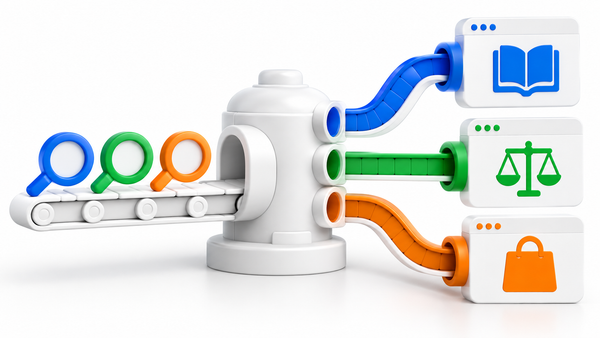
Three kinds of coverage get sold under the same label, and Google treats them differently.
Earned coverage is a journalist or editor deciding to include you. They choose whether you're in the piece and whether there's a link, and that choice is the reason it can't be guaranteed.
Paid placement covers sponsored posts, memberships that come with publishing rights, and link packages. Google's spam policies list "buying or selling links for ranking purposes" as link spam, including "exchanging money for links, or posts that contain links." Paying for placement isn't banned in itself, but Google's guide to qualifying outbound links asks for rel="sponsored" on paid placements (nofollow is still acceptable) and says links with these attributes "will generally not be followed."
Distributed coverage is a press release pushed to many sites through a wire. The same spam page names "links with optimized anchor text in articles, guest posts, or press releases distributed on other sites," and a long report of syndicated URLs proves distribution, not that anyone chose to cover you. Our guide to press release backlinks lists the questions to ask before paying for one.
When money buys the link, what you're really paying for is the mention and its readers. That can be a fair trade if you know it's the trade, and it leaves earned coverage as the route that can do more for search.
What a placement can do for Google and AI answers
Links still matter to Google. Its ranking systems guide describes "various systems that understand how pages link to each other as a way to determine what pages are about and which might be most helpful," and says PageRank "continues to be part of our core ranking systems." Domain Rating is a different thing: it's Ahrefs' third-party estimate, and Ahrefs says there's no evidence that search engines use it as a ranking factor. I'd use DR to sort a long list of outlets, never to predict what a placement will do.
For AI answers, coverage matters because it names you. Ahrefs compared seven kinds of off-site mentions for 10,000 U.S. brands with how often those brands appeared in answers to 260 million non-branded prompts in ChatGPT, AI Mode and AI Overviews. News-article mentions correlated with AI visibility at 0.67, slightly below the 0.70 for mentions on web pages in general, and mentions on high-traffic pages did no better than mentions overall.
Ahrefs' advice was to "aim for a wide spread of mentions across many sites as well as big-name coverage," and it notes these are correlations, not proof that mentions cause AI visibility. For a small business that's a workable finding, because a steady run of accurate mentions in trade and local outlets is within reach, and the cheapest way to start is answering journalists who have already asked for help.
Answering journalist requests
Several services send reporters' requests for sources to experts, and their rules differ more than their sign-up pages suggest:
| Service | How requests reach you | Rule worth knowing first |
|---|---|---|
| Source of Sources | Free email up to three times a day; you reply directly to the journalist | "If you pitch a reporter off topic even once, and it gets back to me, you're gone." |
| HARO | Free daily email, owned by Featured.com since an April 2025 purchase | Cision discontinued Connectively, the former HARO, in December 2024, so older guides describe a different setup |
| Featured | Platform connecting experts with journalists and publishers | No fabricated "quotes, credentials, expertise, affiliations, statistics, or facts"; a qualified person must review AI output before it reaches a journalist |
| Qwoted | You pitch inside the platform and keep interactions there | AI-generated pitches are prohibited; reporters flag irrelevant pitches |
| MentionMatch | Connects B2B writers with expert sources; helpab2bwriter.com now redirects here | No reply rules on its home page; read the terms at sign-up |
Where you sign up matters less than what you send. Take a request about how small-business owners should prepare for a payroll-tax change. A useful reply from an accountant opens with one line of credentials: name, title, firm and why they're qualified on this exact question. It then gives the writer something a search won't turn up, such as the mistake the accountant sees clients make most often, in two or three sentences that could be pasted into the article, and it ends with the attribution written the way it should be printed, including the firm's website, leaving the link decision to the writer.
SOS's ground rules boil the test down to whether a response is "relevant, timely, and accurate," and a reply that fails any of those shouldn't go, whatever the outlet. Anything you send can be printed verbatim under your name, which matters more now that many people draft with AI. Qwoted's code of conduct prohibits "using ChatGPT or similar AI-powered tools to generate pitches for media on our platform," while Featured's acceptable use policy treats AI-generated PR content as a high-risk use that a qualified person must review "for accuracy and appropriateness" before it is sent to a journalist. Keep a copy of everything you send, since it makes a correction request much easier if an article later misquotes you.
The work is steady rather than difficult: reading requests as they arrive, picking the few you can genuinely answer and replying before the deadline. That watching and drafting is what Backlinker AI takes off your desk. For $300 a month, its Pro plan runs done-for-you outreach through Featured.com plus email outreach through SOS and HelpAB2BWriter (now MentionMatch), with pitches drafted by an AI writer trained on your biography. Whether you hand the work to us or to anyone else, ask who approves the wording sent under your name and how each platform's AI rules are followed, because the answers show how much review stays with you.
Requests put you inside a story someone else planned. Pitching lets you propose one.
Pitching local and trade press
Journalists do use pitches, and they're clear about which ones they ignore. Muck Rack surveyed journalists between January 30 and March 2, 2026, keeping 897 responses after quality checks, and in its State of Journalism 2026 announcement, 86% said at least some of their stories originate from PR pitches while 88% said they immediately disregard pitches that miss their beat. Nearly half said they seldom receive pitches that match their coverage.
Their most valued elements were beat relevance, access to relevant sources, original research or data, and high-resolution images, and 78% said a pitch feels genuinely relevant when it directly affects the community their audience belongs to. That last finding favors a local business, which already belongs to a community an outlet covers. Stories a small firm can credibly offer include:
- Data from your own work. An anonymized count of clients affected by a new requirement gives a reporter something no one else has.
- A local angle on national news. When a national rule changes, a local outlet needs someone nearby to explain it.
- Practical help for a trade audience. Trade publications run how-to pieces and need practitioners to write or explain them.
- A genuine milestone, pitched locally. An opening, an expansion or a community project belongs in the local paper, not on a national wire.
Pitch one journalist at a time, say in the first two sentences why the story matters to their readers, and follow up once. Sooner or later a sales email will offer a shortcut to a bigger logo, and it's usually Forbes.
What "featured in Forbes" usually means
The phrase covers at least two different things. The first is coverage by a Forbes journalist, earned the way you'd earn it anywhere else, through a request, a pitch or a referral.
The second is Forbes Councils, a paid membership with an application step. Its home page describes a "rigorous selection process" and says that "upon approval, you'll select the membership package," and the membership terms refer to initiation and annual membership fees. Forbes Councils says Expert Panels are "curated by our editorial team," and the terms describe media opportunities as "only an opportunity to potentially participate," with no guaranteed minimum.
So yes, you can pay for chances to publish on Forbes.com, which can be reasonable if you know what you're buying. Where payment buys a link, Google's rule from earlier says it should be qualified, and for credibility the test is whether you'd show the page to a skeptical customer. Whichever route a placement came from, you only know what it produced once you've checked the live page.
Checking a placement once it runs
A placement can produce three different things, and they show up in different places: a working link to your site, an accurate attribution of your name, title and company, and a business result you can trace. Most placements deliver the first two at best, so log each one separately. For every placement, record:
- The page: the live URL, date, outlet and writer.
- The attribution: whether your quote, name, title and any numbers match what you sent.
- The link: where its
hrefpoints and itsrelvalue (sponsored,nofollow,ugcor none), or "unlinked mention" if there's no link, since it still names you on a page people and AI systems read. - The search side: whether your SEO tool has found it yet, remembering that crawlers find links on their own schedules, and whether it adds a new referring domain or another link from a site you already have.
- The business result: only what you can trace, such as an inquiry that mentions the article.
A provider's report is where the log starts, not where it ends. Backlinker's plan includes monthly progress reports, and I'd still open each page a report mentions and fill in these fields before counting it as a placement. Once the log exists, the remaining question is how to fit the work into a month.
Your first month, week by week
One person can own this alongside other work. I'd budget two to three hours weekly for requests, one pitch a month, and a quarterly look at the log to see which outlets, topics and writers came back. The first month looks like this:
- Week one: write a one-page source document with the expert's bio, title, headshot, website and three verified facts.
- Week one: sign up for SOS and one other request service, and read each one's rules on AI-written replies.
- Week two: answer two requests you can genuinely help with, and save a copy of each reply.
- Week three: draft one pitch for a local or trade outlet, built on your own records.
- Week four: start the placement log and fill it in for anything that has run.
- Before paying for any package or membership: ask what counts as a placement and whether its links are qualified.
- After three months: use the log to decide whether to keep the work in-house or hand part of it off.
Sources
- Google Search Central, "Spam policies for Google web search," August 28, 2026. developers.google.com
- Google Search Central, "Qualify your outbound links to Google," December 10, 2025. developers.google.com
- Google Search Central, "A guide to Google Search ranking systems," December 10, 2025. developers.google.com
- Ahrefs Help Center, "Do search engines use domain authority/domain rating as a ranking factor?," September 3, 2026. help.ahrefs.com
- Louise Linehan, "Which Types of Mentions Correlate the Strongest With AI Visibility? (260M AI Prompts Analyzed)," Ahrefs blog. ahrefs.com
- Source of Sources, "Connecting Reporters With High Quality Sources," home page and ground rules. sourceofsources.com
- PR Newswire, "Featured.com Acquires Help A Reporter Out (HARO) from Cision," April 16, 2025. prnewswire.com
- Cision, "Connectively has been discontinued." cision.com
- Featured, "Acceptable Use Policy," June 2, 2026. featured.com
- Qwoted, "Code of Conduct," October 6, 2026. qwoted.com
- MentionMatch, home page. mentionmatch.com
- Backlinker AI, home page and Pro plan. backlinker.ai
- Muck Rack, "Muck Rack's 2026 State of Journalism Report Finds 82% of Journalists Use AI," GlobeNewswire, March 19, 2026. globenewswire.com
- Forbes Councils, home page. councils.forbes.com
- Forbes Councils, "Terms of Use/Membership Agreement," June 11, 2024. councils.forbes.com